
Who they are
The legal business name, a street address, a phone number and the license number. If the name on the estimate doesn't match the name on the license search, ask why.
HomeGuidesHow to hire a tree service in Oregon
Tree work is one of the more dangerous trades there is, it is done over your house, and almost anyone with a saw and a truck can print a business card. This is how to tell the difference, written so that you can use it on us as well as on anyone else you call.
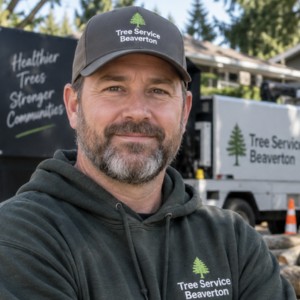 By Harry Fauver, founder of Tree Service Beaverton. Updated September 2026.
In Oregon, anyone who is paid to remove or prune trees on someone else's property has to be licensed with the Construction Contractors Board, or with the Landscape Contractors Board if tree work is part of a landscaping business. To hold either license a contractor has to carry a bond and liability insurance. The license number is supposed to appear on estimates, contracts and advertising.
Both boards have a free online search. Type in the name or the number and you see whether the license is active, how long it has been held, who the owner is, and whether there are complaints or unpaid claims on file. It takes two minutes and it removes most of the people you don't want in your yard.
Licensing matters to you for a practical reason. If something goes wrong with a licensed contractor, the board runs a dispute process and the bond stands behind it. With an unlicensed one, you are on your own.
Two kinds matter, and they cover different things.
Ask for a certificate of insurance sent to you directly by the contractor's insurance agent. A photo of a document on someone's phone proves nothing, because policies lapse and certificates are easy to alter. Any established company gets this request every week and will have it to you the same day.
Pick a tag. A proper estimate reads like a description of the job, because that is what it is.
The legal business name, a street address, a phone number and the license number. If the name on the estimate doesn't match the name on the license search, ask why.
Each tree identified by species and location, with what will be done to it in plain words: remove, reduce the two limbs over the garage by about a third, remove dead wood over two inches, raise the crown to 8 feet over the sidewalk. A line that says only "trim trees" is where disagreements come from.
Climbed and rigged, felled, or worked from a lift. Which gate or side of the house the crew and equipment will use, what gets protected with mats or plywood, and whether the neighbors' side is needed.
Hauled, left in rounds, or chipped and left as mulch. Whether the stump is cut low, ground, or removed, and to what depth. These are the items most often assumed and least often written down.
Who obtains the street tree or protected tree permit if one is needed, and who requests the 811 utility locate before stump work. A company that has never heard of either has not worked in Beaverton for long.
A statement of coverage, what cleanup means (raked, blown, hauled), roughly when the work will happen and how long it will take, the payment terms, and space for both of you to sign. Keep your copy.
A good contractor answers all six without hesitation, and will often raise the third one before you do.
They look at the whole tree, and the base, before talking about the job. They suggest doing less than you asked for when less is enough. They mention permits, property lines or utilities without being prompted. They wear helmets and eye protection, and the ground crew keeps clear of the drop zone. The written estimate arrives when they said it would.
They offer to top the tree. They plan to climb a tree they are pruning, not removing, with spikes. They knocked on your door uninvited, especially after a storm. They want payment in full before starting, or only in cash. There is no license number anywhere. The offer is good "today only." They tell you a tree is about to fall and must come out right now, but can't show you why.
The crew arrives with the right equipment and walks the site with you before starting. Cones or signs go out if the street is affected. Someone is clearly in charge. Limbs over anything breakable are roped down, not dropped. At the end, the yard is cleaned, you walk round together, and anything you aren't happy with is dealt with before the truck leaves.
Get two or three. Then compare them on what they include, not on the total alone, because two estimates for "the same job" are rarely for the same job. One includes the stump and the other doesn't. One hauls the wood and the other leaves it. One is for removing a tree that the other would have pruned.
Put the scopes side by side and make them match before you compare anything else. Ask each company to explain the differences. The explanation usually tells you more than the number does. The lowest figure is sometimes the best value and sometimes the one with no insurance, no permit and no cleanup.
An ISA Certified Arborist has passed the International Society of Arboriculture's exam and keeps the credential current with continuing education. It is a real qualification, it is voluntary, and you can verify anyone's credential in the ISA's online directory. It matters most when you need judgment, such as a written risk assessment, a report for the city, or a second opinion on whether a tree has to come down. For a straightforward removal, a licensed, insured and careful crew is what counts.
Everything above applies to Tree Service Beaverton as much as to anyone else you call. Ask us for a license number and a certificate of insurance before you hire us, the same as you would anyone else, and don't accept fuss about either. Our estimates are written tree by tree, they say what happens to the wood and the stump, they name any permit the job needs, and we would sooner tell you a tree doesn't need removing than sell you a removal. If we fall short of anything on this page, say so.
Yes. Anyone paid to remove or prune trees on another person's property needs a Construction Contractors Board license, or a Landscape Contractors Board license for landscaping businesses. Both require a bond and liability insurance, and both can be looked up online.
Use the free contractor search on the Oregon Construction Contractors Board website. Enter the business name or license number to see whether the license is active, who owns the business, and whether complaints or claims are on file.
General liability, which covers damage to your property, and workers' compensation if it has employees, which covers injuries to the crew. Ask for a certificate sent directly by the insurer or agent, not a copy handed to you.
No. Topping leaves large wounds that decay and triggers fast, weakly attached regrowth, so the tree ends up more dangerous than before. A contractor who suggests it is telling you something about how they work. Reduction pruning or removal are the real options.
For a written risk assessment, a report the city has asked for, or a second opinion on a valuable tree, yes. For routine pruning and removals, licensing, insurance, a clear written scope and careful work matter more than the credential.
Tell us about the tree and we'll call to set up a site walk. For emergency service, skip the form and call.